
During regular Spark® operation, the instrument stops while the run is still ongoing and the status LED starts flashing red.
This article is a complementary and detailed step-by-step guide for proper computer setup, based on latest findings by Tecan.
1. Initial Situation
During regular Spark® operation, the instrument stops while the run is still ongoing and the status LED starts flashing red. Additionally, an error like ‘ERR9XXX: Connection has been lost’ might be displayed, e.g.:


It is recommended to perform the following steps in the given order prior to initial Spark operation. This will enable a stable and reliable connection between the notebook/PC and the Spark. This article is a complementary and detailed step-by-step guide for proper computer setup, based on latest findings by Tecan. Most steps are applicable to Windows 10 and 11 alike.
2. Quick response steps to re-establish connection after an interruption
- Switch off the Spark with the main switch on the rear side
- Disconnect the power cord of the Spark
- Wait for 30 sec
- Turn off your PC
- Reconnect the power cord to the Spark
- Turn on the PC and wait until it is fully booted
- Switch on the Spark with the main switch on the rear side
- Wait for the Spark until the LED indicator light has changed its color to magenta
- Start the user software (e.g. SparkControl™ or SparkControl™ Magellan™) and check if a connection to the instrument can be established
3. Computer setup guideline
- Windows updates
Ensure that the latest Windows, BIOS and driver updates are installed on the PC.
Recommendations OS versions:
- Windows 10: version 22H2 or higher
- Windows 11: version 24H2 or higher
To check for updates, select START → SETTINGS → WINDOWS UPDATE → CHECK FOR UPDATES
Perform all available updates.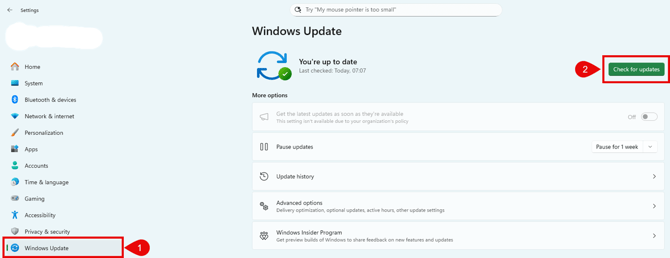
- HP Support Assistant: This option only applies to HP computers!
- Ensure that the user possesses administrative rights for the PC
- Ensure that the PC is connected to the internet via a stable connection (LAN or WIFI)
- Download and install the HP Support Assistant from https://support.hp.com/ph-en/help/hp-support-assistant
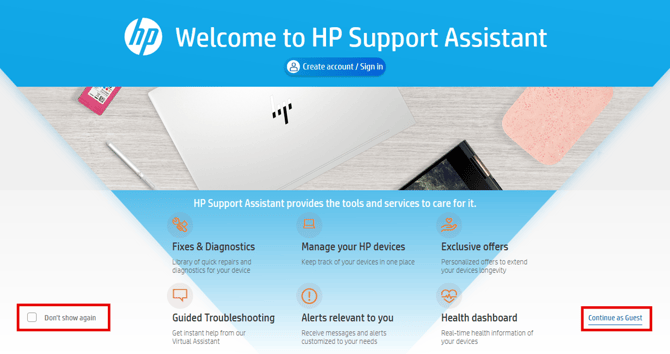
Once installed, open the HP Support Assistant. Upon first startup, it will ask you for a sign in. This is not required, simply select ‘Continue as Guest’.
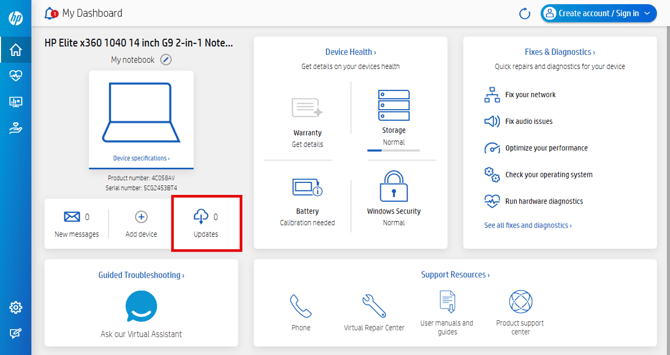
In the dashboard, navigate to ‘Updates’:
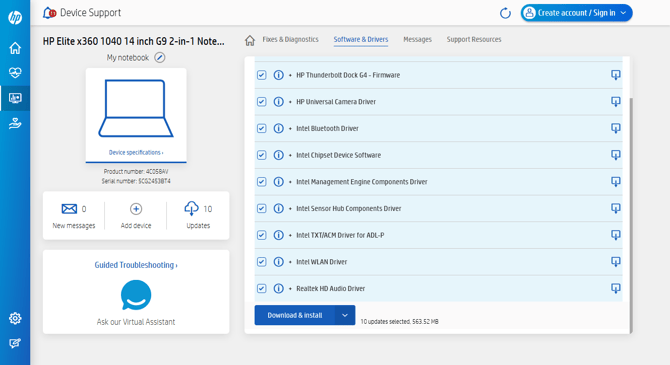
After clicking the button, the assistant will automatically look for available updates. This might take a few minutes. Once finished, available updates are shown. Select all and select ‘Download & Install’:
- Lenovo System Update: This option only applies to LENOVO computers!
- Ensure that the user possesses administrative rights for the PC
- Ensure that the PC is connected to the internet via a stable connection (LAN or WIFI)
- Download and install the Lenovo System Update from Lenovo System Update: Update Drivers, BIOS, and Applications - Lenovo Support CH
Once installed, open the Lenovo System Update. Click the ‘Next’ button on the welcome window to get new updates or click the ‘Get new updates’ link on the menu located on the left of the window.
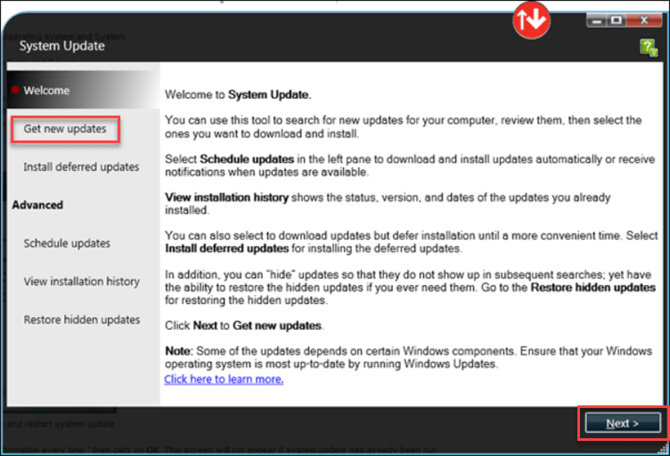
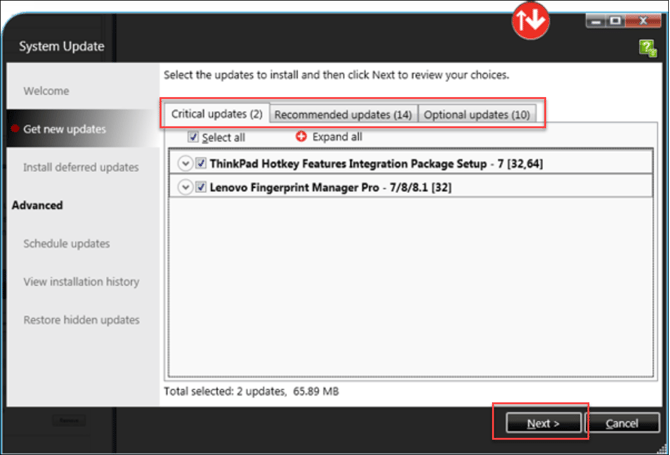
After a window showing the search progress for new updates, various tabs with available updates are shown. Review each tab and select the needed updates. Tick the updates and click ‘Next’.
- DELL Command Update: This option only applies to DELL computers!
- Ensure that the user possesses administrative rights for the PC
- Ensure that the PC is connected to the internet via a stable connection (LAN or WIFI)
- Download and install the DELL Command Update from Dell Command | Update | Dell Schweiz
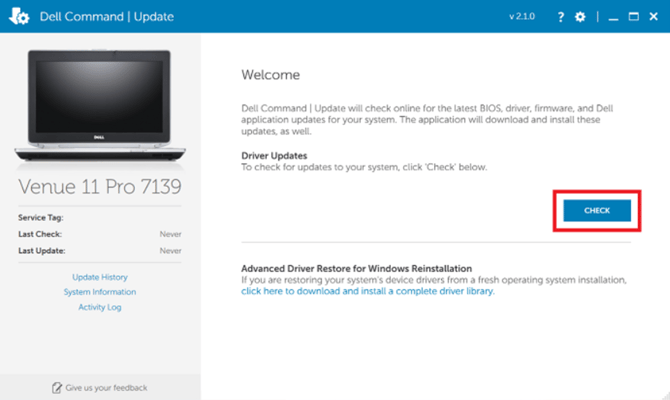
Once installed, open the DELL Command Update and click the ‘Check’ button to allow app to check your computer and identify any required updates.
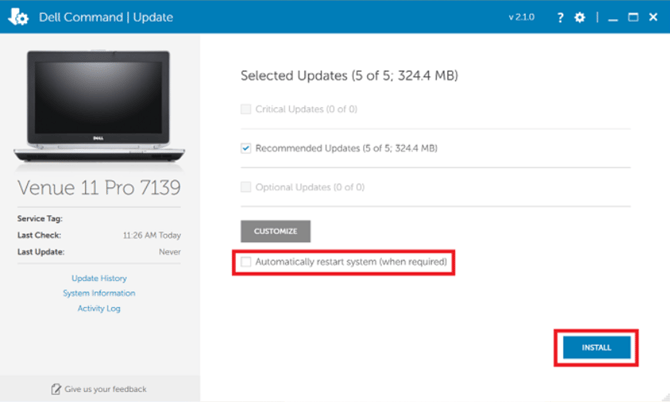
Select the recommended updates, select ‘Automatically restart system (when required)’, then click the install button.
- Windows power settings
Ensure that the PC and Windows Power Settings are set correctly. This is required as some settings, if set falsely or left at default, could put the USB ports into hibernation mode and thus interrupt communication with the Spark.
NOTE: Windows Power Settings may reset to default after each Windows Update. Therefore, it is strongly recommended to check them on a regular basis and after each Windows update.
Windows Power Settings: START → SETTINGS → SYSTEM → POWER & BATTERY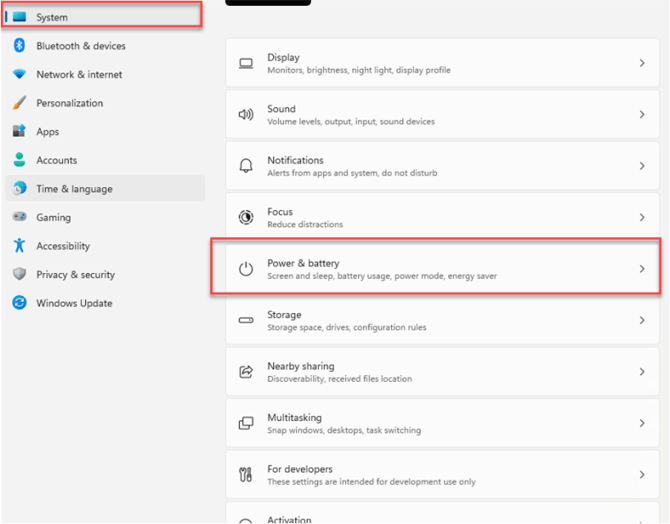
Change all ‘Screen, sleep, & hibernate timeouts’ to ‘Never’: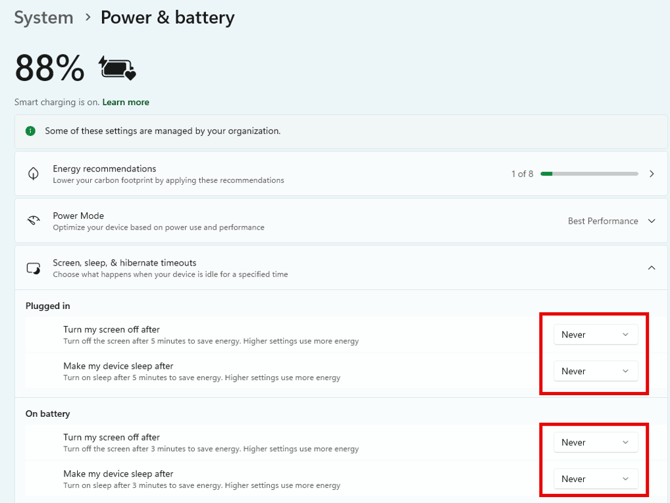
Note: It is not recommended to use the Spark with a notebook operated in battery mode.
- Windows power options
Ensure that the second set of power-/USB- settings is set correctly within the Windows control panel:
Windows Power Options: START → CONTROL PANEL → HARDWARE AND SOUND → POWER OPTIONS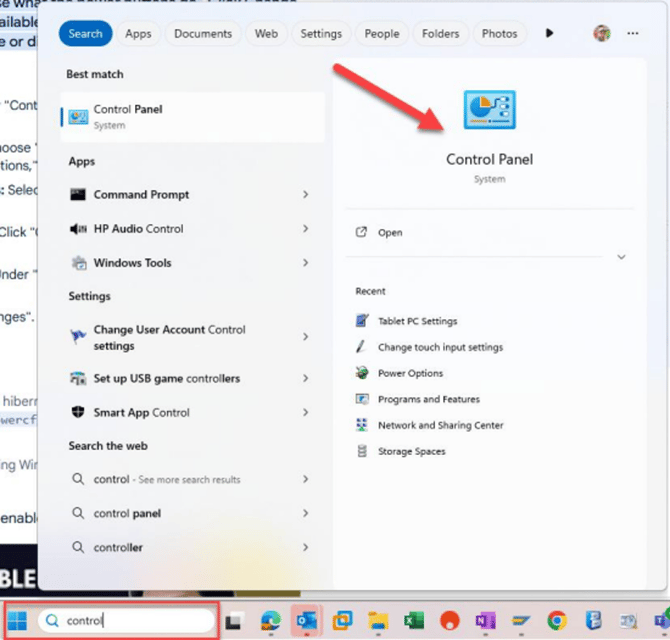
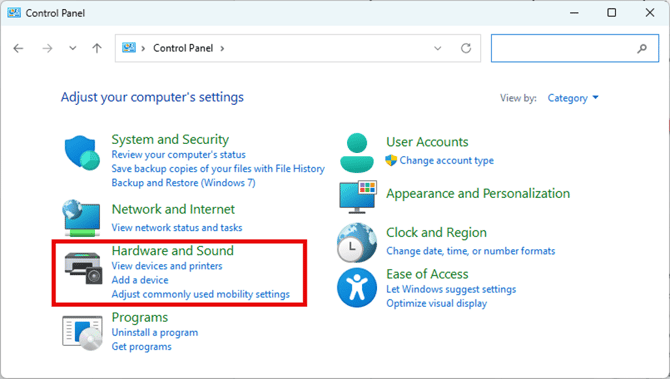
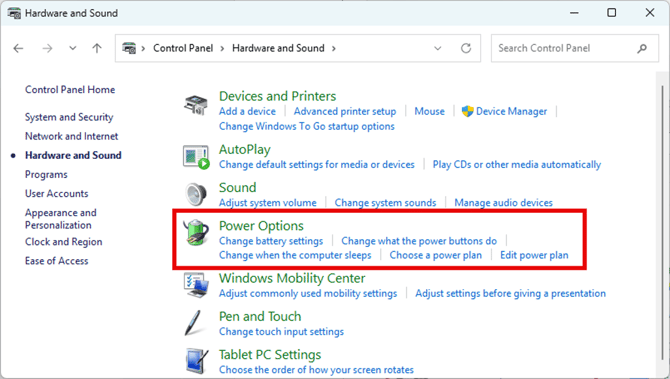
In the next screen, if multiple plans are available, always choose the ‘highest’ performance (or equivalent) power plan. Avoid power/battery saving modes. Then, select ‘Change plan settings’: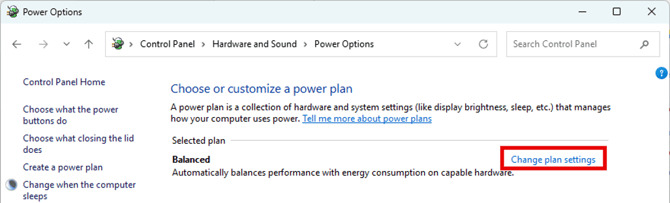
Set all options to ‘Never’. Then, select ‘Change advanced power settings’.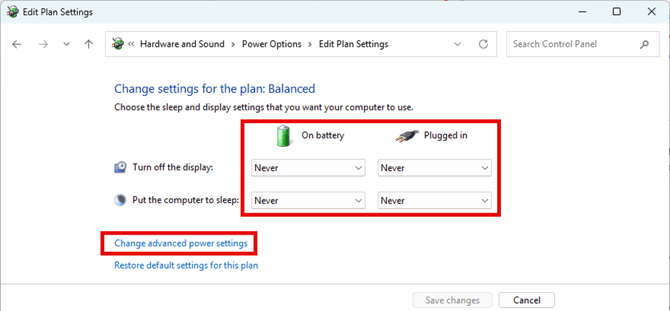
Set the option ‘Turn off hard disk after’ to 0 (=Never) and click on ‘Apply’.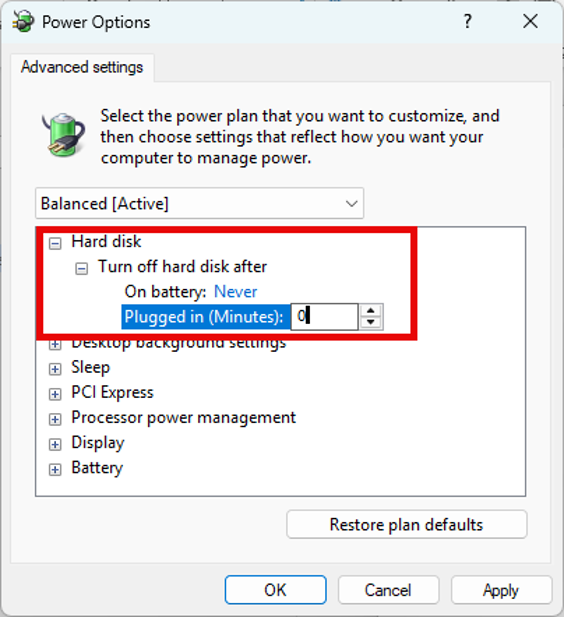
In addition, set the options ‘Sleep’ and ‘PCI Express’ according to the screenshots: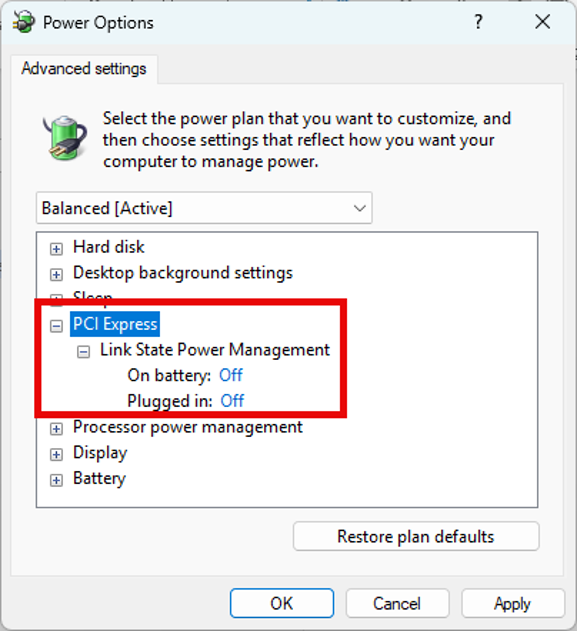
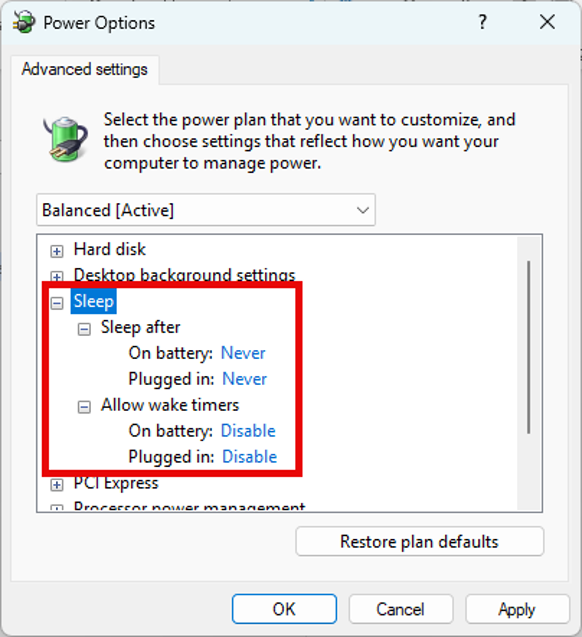
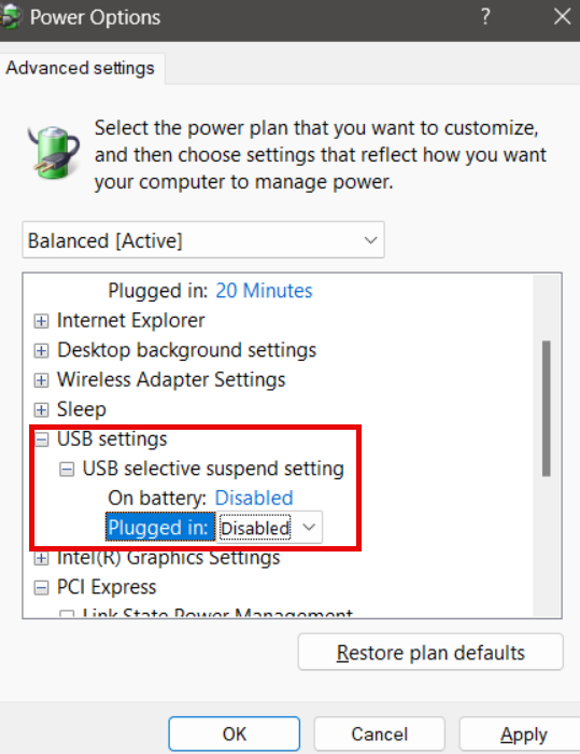
- Deactivate fast startup
Return to the CONTROL PANEL → HARDWARE AND SOUND → CHANGE WHAT THE POWER BUTTONS DO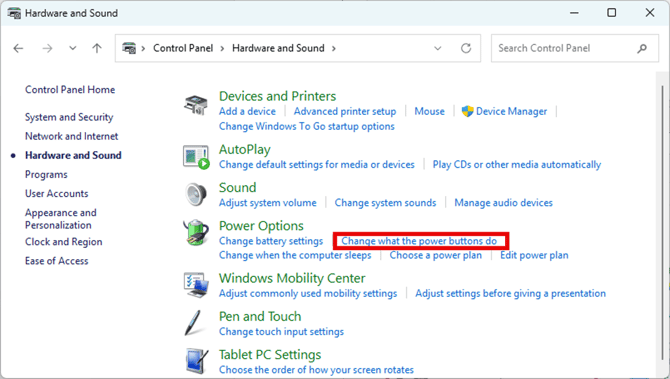
In the Shutdown-Settings, deselect ‘Turn on fast startup’ and ‘Hibernate’: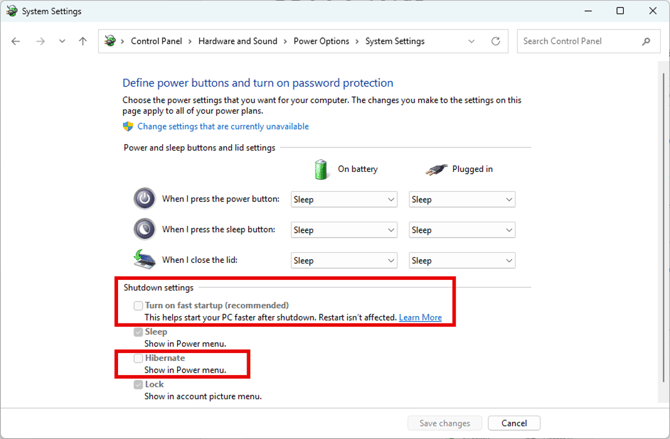
- Deactivate USB battery saver
This feature was introduced with Windows 11.
START → SETTINGS → BLUETOOTH & DEVICES → USB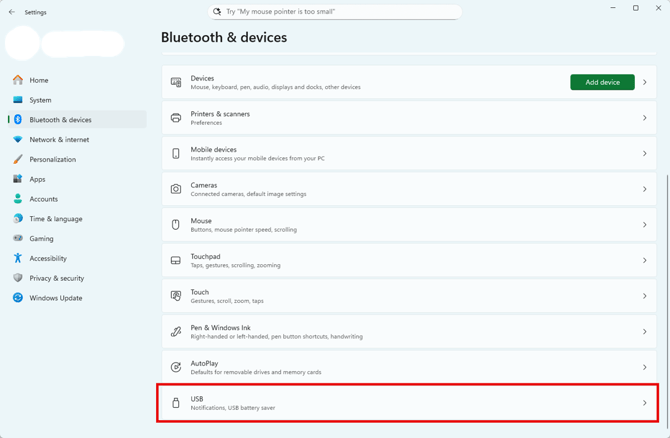
Deactivate the USB battery saver: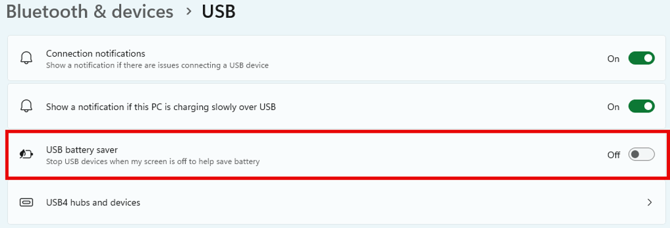
- USB controller properties in the Windows Device Manager
This is a crucial adjustment/setting which must be checked regularly, as system updates tend to revert these properties to their (inappropriate) defaults. Administrative rights are required! The Device manager can be started with a right click on the Windows icon: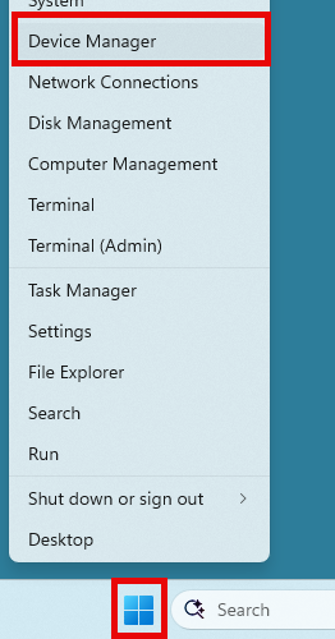
Start the Device Manager and expand the list of Universal Serial Bus controllers. In this list, right click on every single listed USB controller → PROPERTIES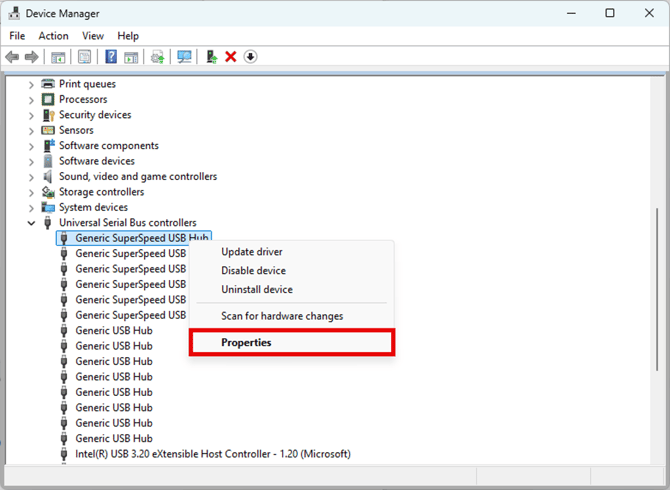
Go to ‘Power Management’ and deactivate/uncheck the option ‘Allow the computer to turn off this device to save power’ for each USB controller: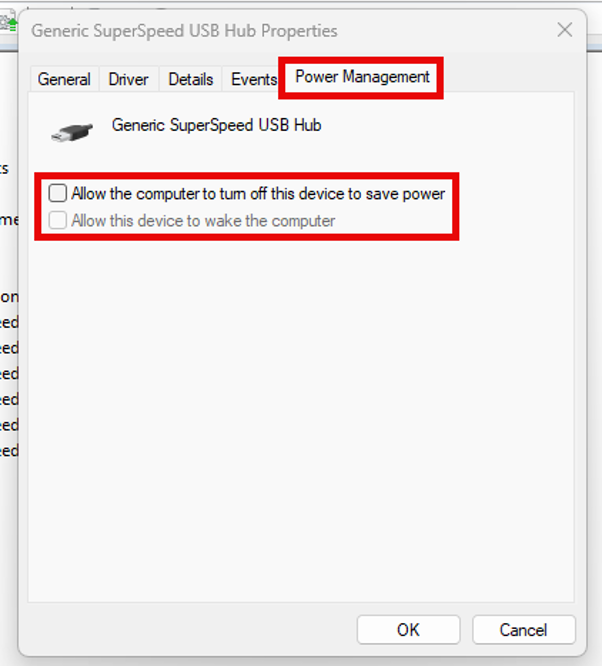
- Windows hibernate settings
Start Windows Command Prompt and run as Administrator :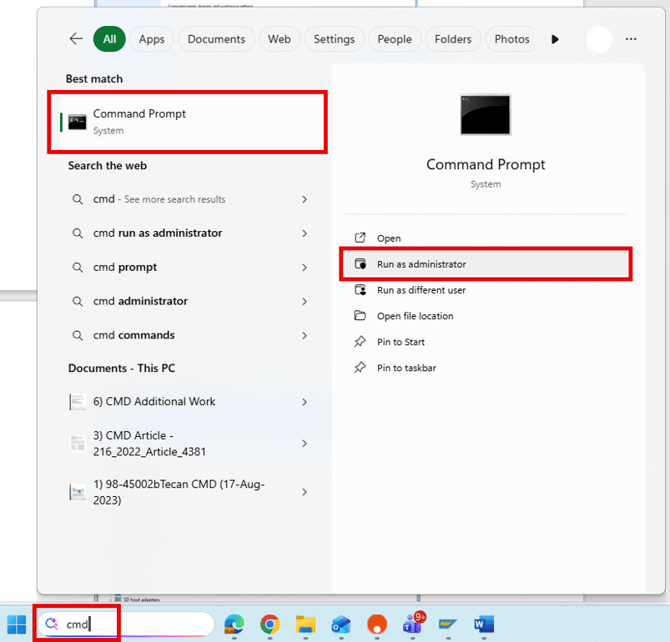
Type powercfg /a and confirm with Enter: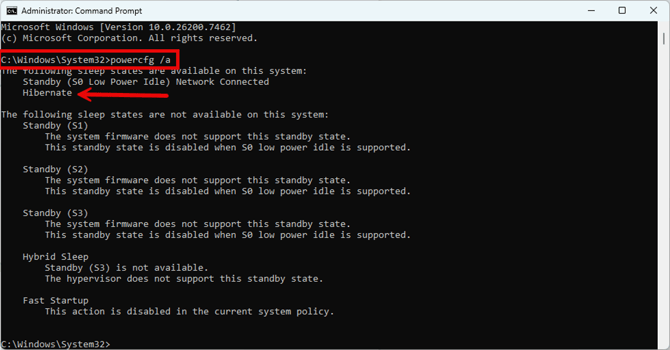
If ‘Hibernate’ is displayed (red arrow), the hibernate function is active. To deactivate it, type powercfg /h off and confirm with Enter.
Afterwards, to check if the deactivation was successful, type powercfg /a again and check that ‘Hibernate’ is absent (red arrow).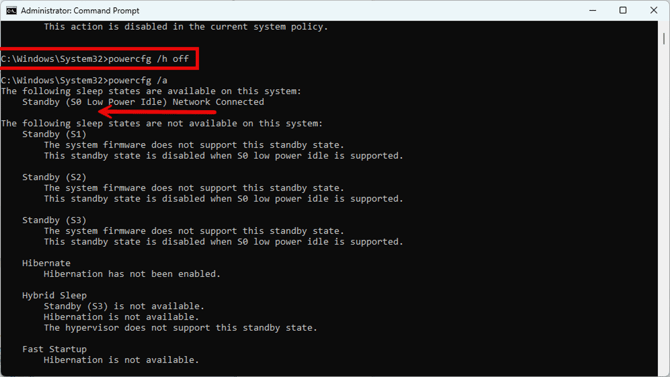
- Local antivirus/backup-programs
Consider adjusting the scheduled timing of virus scans and/or backups to avoid interference with active measurements, e.g. during a long-term kinetic measurement running overnight. If required, clarify with your local IT administrator.
- USB hubs
Some notebooks might only come with a very limited number of USB-A connection ports. In such cases, we recommend the use of the following USB-C to USB-A hub: HP USB-C to USB-A – Hub https://www.hp.com/de-de/shop/product.aspx?id=z6a00aa&opt=&sel=acc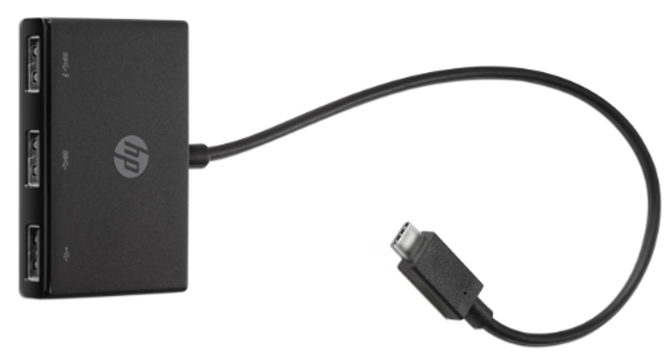
- Other hardware recommendations
-
Tecan provides a high-quality USB cable which is shipped with the Spark. It is strongly recommended to only use this cable for connection with the Spark.
-
With tower PCs, use rear motherboard USB ports which are designed for high-speed data transfer. Avoid using front-panel USB ports.
-
If the steps above do not resolve the issue, it might be necessary to install a dedicated USB 2.0/3.0 PCI plugin card.
Download here our Recommendations for Spark® software installation for additional information.
For further help, please refer to our Tecan Helpdesk.
Further help
How to find files needed to support
Link to Tecan Product Page:
401821-021