








Basel, Switzerland, has a long tradition in healthcare and life sciences and is widely regarded as the birth place of the Swiss pharmaceutical industry. Today, this legacy continues through a strong ecosystem of academic, clinical, and industrial research.
One example is the University Hospital of Basel, one of Switzerland’s largest research hospitals, employing around 8,000 people. Alongside its mission to provide high-quality patient care, the hospital plays a key role in medical training and innovation, including advanced laboratory medicine. The hospital has extensive laboratory medicine capabilities, covering all the major clinical diagnostic disciplines. Approximately 240 employees perform over 7 million analyses per year, around the clock, 365 days per year. “It’s true, we are a big lab!” smiles Ms. Irene Götze, biomedical analyst in the clinical toxicology laboratory.
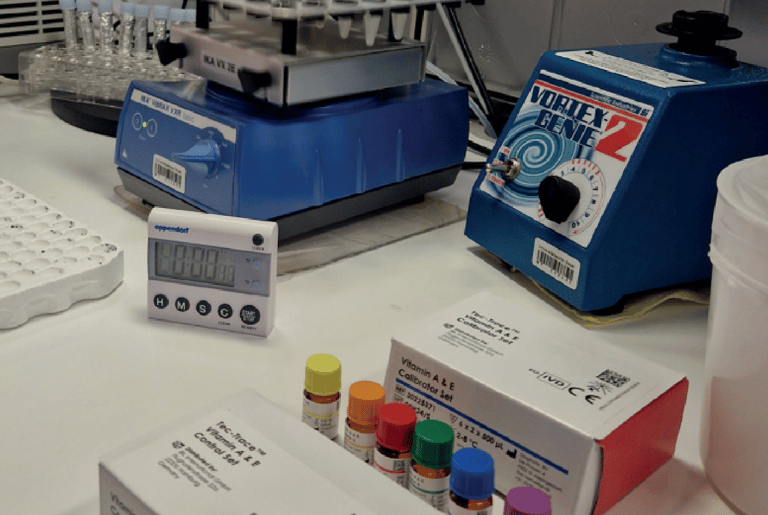
The clinical toxicology lab is part of the University Hospital’s Clinical Chemistry laboratory and the team processes a wide range of drug and metabolite analyses, receiving approximately 1,000 test requests per week. Close to 8% of these requests are for the analysis of vitamins A and E.
The importance of vitamins for health has long been recognized. Nobel Prize–winning chemist Linus Pauling, best known for his work on vitamin C, once said, “You can trace every sickness, every disease, and every ailment to a mineral deficiency”.
The analysis of the fat-soluble vitamins A and E is commonly performed in individuals with malabsorption syndromes such as Crohn’s disease or Celiac disease. It is also used in patients with chronic liver disease and for follow-up of post bariatric surgery patients. In patients receiving high-dose supplements, monitoring vitamin levels is essential to ensure therapeutic efficacy while avoiding toxicity.
“Vitamins A and E are important markers in a variety of clinical situations,” explains Ms. Götze. “Approximately two-thirds of our samples come from outpatient clinics. Depending on the patient’s medical history, the vitamin tests are ordered as part of a screening process.”
The analysis of these vitamins has evolved at the University Hospital. Until recently, the testing was outsourced to an external laboratory. In April 2025, rising test volumes prompted the decision to bring the entire workflow in-house using a Liquid Chroma tography-Mass Spectrometry (LC-MS) method.
Looking to the future, Ms. Götze believes that although easily automated methods such as immunoassays are unlikely to be totally replaced due to their competitive price/performance ratio, LC-MS, as a highly specific analytical method, will remain and become more relevant even in laboratories that do not have such long experience with the technique as the Toxicology lab in Basel. She stresses that the ability to recruit qualified technicians will be key for any lab thinking of introducing LC-MS.
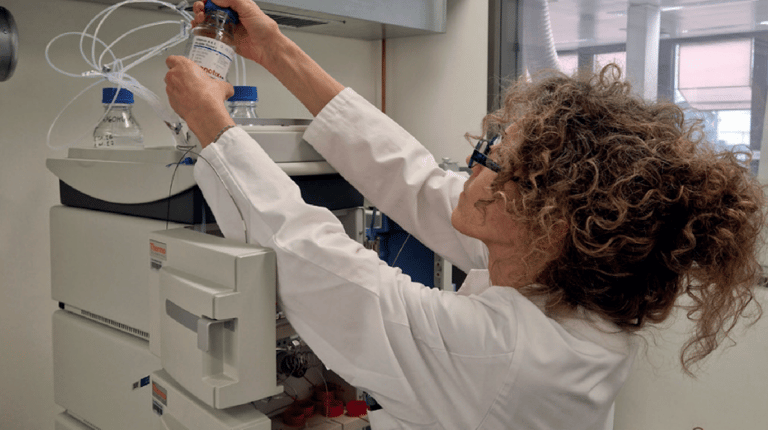
She also appreciates the collaboration with Tecan: “Overall, I can say that our project to insource the vitamin A & E workflow has been a success and Tecan was certainly instrumental in that. We like working with Tecan and the technical data they provided on the kits has been very valuable.”
In conclusion, it is heartening to see that innovation and collaboration continue to thrive in a city that is so closely associated with the history of healthcare!