








Forensic research plays a critical role in ensuring that judicial decisions are supported by reliable scientific evidence. A key obstacle faced by forensic researchers is ensuring that samples are processed quickly, a task that can be challenging when there are many cases to support. In time-critical situations, such as when individuals are held in custody, laboratories may have as little as 48 hours to deliver DNA results.
The Polish Institute of Forensic Research is integrating automation, including Tecan’s DreamPrep®, into its DNA analysis workflows to streamline and accelerate identification of suspects while maintaining the highest standards of accuracy and objectivity required by the judicial system.
.webp?width=768&height=511&name=AdobeStock_1639716633_Editorial_Use_Only%20(1).webp)
The Polish Institute of Forensic Research, Krakow, Poland
The Institute of Forensic Research and the Polish judicial system
The Polish Institute of Forensic Research, managed by the Minister of Justice, performs DNA testing for prosecutors, judges and police. Automation is key to the success of the institute. Tomasz Kupiec, Head of Forensic Genetics Section at the institute, explains: “We are a small team but through the integration of automation we are able to process a large amount of case work to support the Polish judicial system.”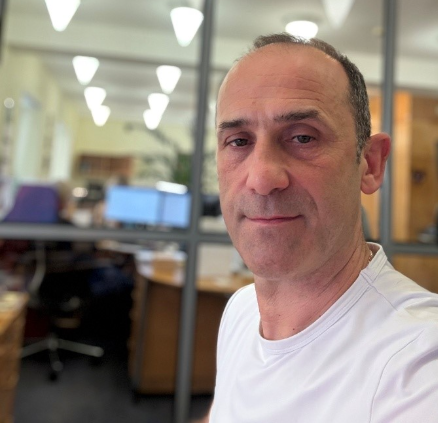 Tomasz Kupiec, Head of Forensic Genetics Section at the Polish Institute of Forensic Research
There is a complex network of many different departments and laboratories involved in processing casework for the justice system, including legal medicine institutes and private institutions. Some laboratories are also dedicated to supporting the Polish Army rather than civilian law enforcement. As the only forensic institute operating directly under the Ministry of Justice, the Institute of Forensic Research occupies a unique and independent position within this network.
A key consideration in forensic casework is turnaround time, with DNA results required within 48 hours for individuals held in custody. While the institute supports police investigations, it operates independently from police laboratories, ensuring objective assessment of whether suspect DNA matches evidence from crime scenes or autopsies.
The institute’s collaboration with police extends beyond casework to research and education, including online scientific seminars shared with laboratories in cities such as Warsaw, Poznan and Lublin, as well as contributions to laboratory accreditation across Poland.
DNA extraction and profiling: the cornerstones of forensics
Key to facilitating the casework that the institute performs is DNA extraction from a range of samples, including human remains. “We focus on methods that improve the efficiency of this technique as, depending on the source of the DNA, it is often necessary to use a combination of extraction methods to obtain enough good-quality DNA for the downstream testing,” explains Tomasz.
Originally, DNA profiling relied primarily on Short Tandem Repeat (STR) analysis. Today, the institute also integrates single nucleotide polymorphism (SNP) analysis, which enables the use of next-generation sequencing (NGS) technologies. NGS provides increased statistical power and greater genetic insight, which is especially useful when the reference material is limited. The institute has also started to perform whole-genome mitochondrial DNA sequencing to further support identification.
Applying NGS libraries in complex forensic cases
One example of how NGS has supported criminal investigations involved a complex paternity case. Initial STR analysis failed to demonstrate a clear relationship between a father and son due to a rare genetic mutation present in the father.
By applying NGS technology alongside STR sequencing, researchers were able to generate additional genetic information and statistical power. This resulted in the institute confirming the biological relationship between father and son, resolving a case that could not be solved using conventional methods alone.
Beyond criminal casework, NGS libraries are also used in the identification of historical human remains, including victims of World War II and its aftermath. In these cases, distant relatives such as cousins or uncles may be the only available references, requiring analysis of hundreds or thousands of genetic markers to achieve sufficient certainty.
Integrating automation to streamline workflows
Despite the extensive network of laboratories supporting the Polish judicial system, there is often an increasing number of cases requiring processing. Automation is central to enabling these facilities, including the Institute of Forensic Research, to keep pace with growing demand.
Automation reduces human error in analysis, increasing the accuracy and precision of results. It also enhances analysis throughput, with automated systems able to run many more samples in parallel. “A less expected advantage of automation is its role in reducing contamination. As there is less human interaction with samples, this approach to DNA analysis can overcome the obstacle of contamination,” added Tomasz.
By automating repetitive and labor-intensive tasks, forensic scientists are also able to focus more of their time on interpretation and expert decision-making, areas where human judgement remains essential.
Why automation matters: expanding NGS capability with Tecan DreamPrep
The institute has a range of equipment to support its DNA analysis, including the Tecan DreamPrep solution, which facilitates automated preparation of NGS libraries, integrating preparation, quantification, normalization and pooling of NGS libraries into a single automated workflow.
The institute has a long history of using Tecan instrumentation. “The Tecan DreamPrep solution was a natural choice for us,” says Tomasz. “We have successfully used other Tecan equipment for many years. This system is robust and user-friendly, easily facilitating the implementation of new programs and integration of equipment, enabling streamlined NGS library preparation. Our past great experience with Tecan’s service team was another factor that weighed into our decision to integrate a DreamPrep solution into our laboratory.”
In addition to NGS library preparation, the DreamPrep system is used for other sequencing-related workflows, including Sanger sequencing setup, supporting a flexible and multi-purpose laboratory environment.
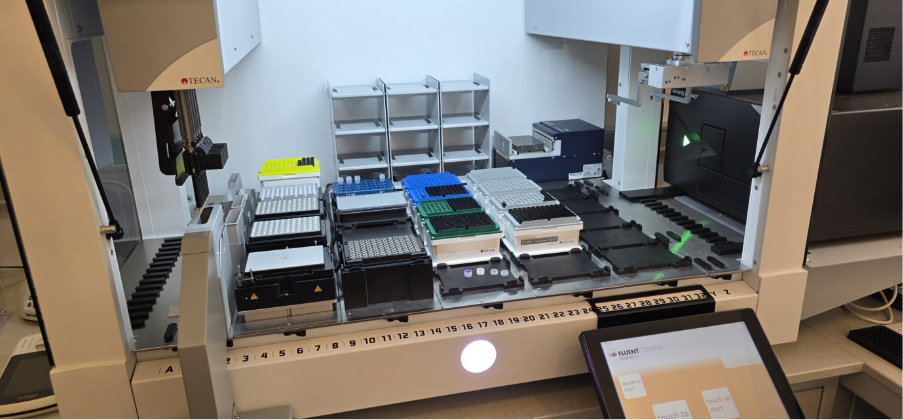 The automated Tecan Fluent platform at the Polish Institute of Forensic Research
Looking ahead: how automation and AI will shape the future of justice
The institute is exploring the integration of artificial intelligence (AI) and machine learning (ML) into forensic workflows. One area of focus is the detection of spermatozoa, a traditionally manual and time-consuming task. By applying AI-based image recognition, preliminary identification of sperm cells can be automated, allowing scientists to validate results rather than perform manual screening.
In the longer term, the institute anticipates that the integration of automation will be even more widespread in forensic research. Automation could eventually combine DNA extraction, amplification, quantification and electrophoresis into a single high-throughput instrument capable of processing many samples in parallel.
Of course, expert insight will still be required for certain parts of the process, such as determining the results of staining of bodily fluids, but moving towards a future where as much of the workflow is automated as possible has the potential to greatly increase reliability and throughput of casework, resulting in an increase in the number of cases solved by the justice system.