









Ask any child, or indeed any adult, to name their favorite animal and there is one popular species that will regularly appear at the top of the list, the koala. Many people consider the koala to be among the most endearing animals in nature and it has long been recognized as an iconic symbol of its home country, Australia.
However, all is not well in the koala’s world and the future of this beloved species is under mounting threat. The Australian Koala Foundation (AKF) estimates that 80% of the koala’s original habitat has been lost since European settlement in Australia, largely due to urban development and agricultural expansion. In recent years, climate change has further impacted the eucalyptus forests on which koalas depend, with extreme weather events such as floods and wildfires becoming more frequent. These stressful conditions have made koalas more susceptible to disease, most notably caused by infection with Chlamydia. This bacterial-induced disease causes blindness, infertility and often death, taking a devastating toll on already fragile populations. The AKF now estimates that fewer than 64,000 animals remain in the wild in Australia, with some other estimates putting the number even lower.

Ongoing habitat loss and population decline have left the remaining wild koalas living in small, geographically isolated groups, which creates a new threat of shrinking gene pools. Consequently, the study of koala genomics now finds itself on the front line of efforts to conserve the species for the future.
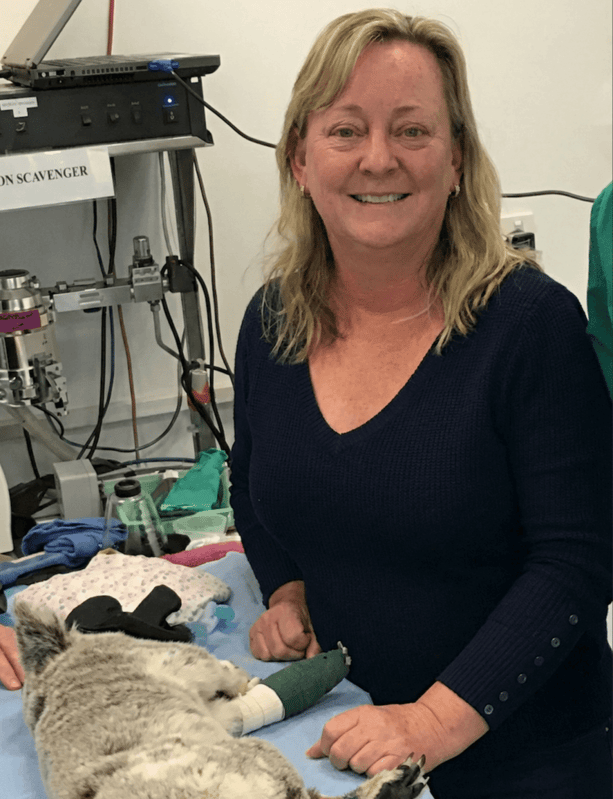
“The idea for our project arose due to the endangered status of koalas” explains Dr. Lyndal Hulse, a post-doctoral scientist at the University of Queensland’s School of the Environment in Brisbane, Australia. Hulse is deeply involved in pioneering efforts to understand genetic diversity within koala populations, a project that she is carrying out in partnership with AGRF Ltd (Australian Genome Research Facility). Established in 1997, AGRF is Australia’s leading provider of multi-omic services and expertise, supporting science through laboratories located across the country.
“The project is very collaborative,” continues Hulse, “we work closely with a number of organizations, including the Currumbin Wildlife Hospital here in Queensland, to obtain samples. These are typically tissue, opportunistically obtained during ear- tagging when animals are admitted to the wildlife hospital, but we can also use whole blood.”
The koala study tapped into an existing database of around 400 koala genome sequences to identify the most appropriate single nucleotide polymorphisms (SNPs) for diversity monitoring. Behind the scenes, Tecan’s technical support team tailored the Allegro® Targeted Genotyping kits to the chosen SNPs and optimized the reagents for use with the koala genome.
This targeted approach enabled researchers to gain rapid, cost-effective insights into population diversity. Allegro® makes genotyping more efficient by minimizing workflow complexity and simplifying data analysis.
“A key driver of our project was standardization,” says Dr Hulse. “Until now researchers have all been using different micro satellite assays with no way of comparing populations”
The workflow now being run at AGRF’s Brisbane laboratory is fully validated and demonstrates how standardized workflows can enable researchers to benefit from a shared database. The work that began in Queensland is already attracting interest from other parts of Australia, including the Australian Capital Territory and Victoria. The next step could see international researchers joining efforts to monitor captive koala populations in zoos around the world.
The data generated from this exciting project will help to conserve wild koalas in Australia by using the knowledge gained to facilitate new ways to manage and strengthen the gene pools within and across different groups.
And what about other species? “Well, there is no reason why the approach here could not be applied to other endangered species, in fact I have a couple in mind!” smiles Dr. Hulse. Clearly, targeted genotyping looks set to continue to play an important role in animal conservation in the future.
Keywords: